Hantavirus Global Situational Briefing — June 11, 2026

Hantavirus Global Situational Briefing — June 11, 2026

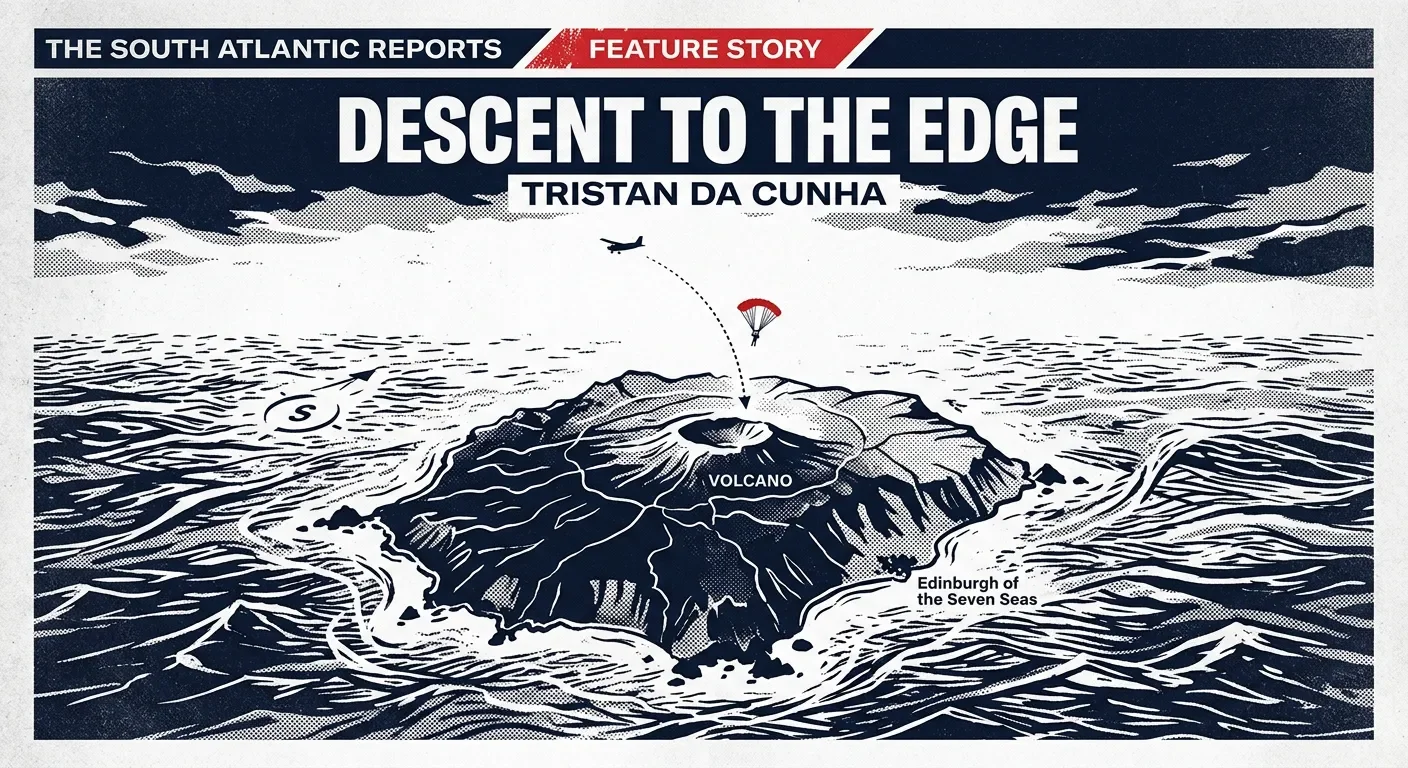
The Tristan da Cunha probable case is reclassified as UK-confirmed — the global cluster holds at 13 cases and 3 deaths. British Pathfinder commandos flew 7,000 miles to execute a rare tandem parachute jump onto the world's most remote inhabited island to deliver medical care. In France, the Seitre couple's civil-liberties petition awaits a court ruling; the ECMO patient passes Day 35 with 14 days of public silence. The Malargüe rodent survey enters its penultimate day as Argentina and US CDC investigators prepare to close field operations on June 12.

Hantavirus Global Outbreak Monitor
June 11, 2026 · 8:13 AM
6 subscriptions · 32 items

Tristan da Cunha: probable case confirmed, paratrooper airdrop details emerge

The most isolated thread in the MV Hondius outbreak moved from "probable" to "confirmed" on June 10. WHO Director-General Tedros Adhanom Ghebreyesus posted on X at 14:34 UTC that the United Kingdom has reported a confirmed case of Andes hantavirus on Tristan da Cunha — a British Overseas Territory in the South Atlantic Ocean home to approximately 250 people — in a person previously classified as a probable case with exposure on MV Hondius during the ship's call there on April 13–15. 1
This is a reclassification, not a new infection. The global cluster count remains 13 cases, 3 deaths. No new deaths have been reported since May 2. 2 The WHO's overall risk assessment — low at the global level — is unchanged.
Loading stats card…
What gives the Tristan da Cunha case unusual texture is not the reclassification itself but how British authorities reached the patient. An Instagram account published a first-person account on June 10 describing in detail the military logistics: six commandos from a Pathfinder platoon, 16 Air Assault Brigade, flew approximately 7,000 miles from a base in England aboard an A400M transport aircraft and executed tandem parachute jumps onto the island. Two of the Pathfinders each jumped with a medical specialist — one physician, one critical-care nurse — attached in a double harness. 3 Tandem jumps of this type, the account explains, are among the rarest skills in special operations globally; the technique entered military use in the 1990s following civilian skydiving innovation by Ted Booth. The jump allowed the UK to deliver specialty medical care to a location that no scheduled aircraft or vessel serves on short notice.
The Tristan da Cunha patient remains the only case with no quarantine-facility infrastructure behind it; the island's remoteness made the airdrop the fastest available option.
/2026/06/10/6a29a496632de148102646.jpg) MV Hondius at Rotterdam, May 20, 2026 — the vessel at the center of the outbreak. 2

France: civil-liberties challenge at Bichat, ECMO silence at Day 35

At Hôpital Bichat in Paris, the outbreak is running on two separate legal and clinical tracks simultaneously.
The Seitre case — civil liberties: Julia and Roland Seitre, retired wildlife veterinarians and photographers who tested PCR-negative throughout their time aboard MV Hondius, have been confined in 20–25 m² negative-pressure isolation rooms at Bichat since May 10. They filed a petition with the juge des libertés et de la détention on June 8, asking a civil-liberties judge to transfer their remaining quarantine to home isolation. Under the current protocol — mandatory hospital confinement for all 26 French contacts — their scheduled release date is June 21. Roland's birthday was June 9; he spent it in a negative-pressure hospital room. 4 No ruling has been publicly reported as of this briefing; the court could rule any day.
The ECMO patient — clinical silence: The 65-year-old woman on extracorporeal membrane oxygenation at Bichat is now approximately Day 35 on ECMO support. The last confirmed public update on her condition was May 28 — "no further deterioration" — putting the public information blackout at 14 consecutive days as of June 11. All 26 French contacts remain PCR-negative and are tested three times weekly. The France government has confirmed mandatory hospital isolation for all contacts; the EU-Japan favipiravir consignment (1,400 Fujifilm tablets) was received by France and the Netherlands in late May. 5
The Seitre case has become the most visible challenge to France's strict-isolation approach. Their situation differs from the Spanish or US frameworks: in Spain, PCR-negative contacts were permitted home quarantine for the final 14 days after 28 days in hospital; in the US, home monitoring under state surveillance began June 1 for asymptomatic, PCR-negative NQU passengers. France has held the hospital-confinement line for all contacts regardless of repeated negative tests.

US National Quarantine Unit: 10 remain, 8 home, all clear

As of the CDC's June 9 update — the most recent posted at time of publication — 10 passengers remain at the National Quarantine Unit at Nebraska Medicine, Omaha, and 8 passengers have returned home to complete their 42-day monitoring period under state public-health supervision. All 18 are symptom-free and PCR-negative. 5
The monitoring endpoint for the May 11 NQU cohort is June 22. Jake Rosmarin (Boston), who committed voluntarily to the full 42-day stay at NQU, will be among those who complete monitoring on that date. Dr. Stephen Kornfeld (Oregon), home since June 1, reaches his monitoring endpoint June 21.
Separately, the CDC published a Federal Register notice on June 10 (docket 2026-11557, 91 FR 35213) proposing a formal data collection framework titled "2026 Andes Hantavirus Cruise Passenger and Traveler Contact Monitoring." 6 The proposed collection covers case investigations and active monitoring data for contacts identified in domestic and international hantavirus exposure events, including epidemiologic, clinical, and laboratory data. Comments are due by August 10, 2026, under Docket CDC-2026-1024. The notice institutionalizes the contact-monitoring infrastructure developed during this outbreak, creating a reusable framework for future Andes virus exposure events.
A precedent-relevant clearing came on June 6: all US passengers who disembarked from MV Hondius before the outbreak was identified completed their 42-day monitoring with no hantavirus cases detected. CDC confirmed no further public-health follow-up is needed for those individuals. 5

Spain: Case 2 still at UATAN, contacts enter home isolation phase

Spain's Case 2 — a passenger currently hospitalized at the Unidad de Aislamiento de Alto Nivel (UATAN) of Hospital Central de la Defensa Gómez Ulla — remains under medical supervision with a persistent low-grade fever (febrícula) and no evident clinical deterioration. Discharge criteria require three consecutive symptom-free days and two negative PCR tests. 7
The 12 asymptomatic contacts who cleared Gómez Ulla on June 7 are now in home isolation through approximately June 21. Spain's Case 1 — the 70-year-old patient, the first confirmed cluster recovery — was discharged from Gómez Ulla around June 4–5 and is receiving six-month medical follow-up.

Argentina: Malargüe rodent survey enters final day, Ushuaia results still pending

The joint ANLIS Malbrán–US CDC rodent-trapping mission in Malargüe, Mendoza Province is on Day 4 of its 5-day window (June 8–12); the field mission concludes tomorrow, June 12. The team is trapping rodents and collecting blood samples for analysis at Malbrán's Buenos Aires laboratory — a process that takes approximately one month from collection, placing preliminary results around ~July 8–12. 8
Malargüe was selected on the basis of eco-epidemiological criteria and travel history: the Dutch couple who became the cluster's index cases traveled through Mendoza's wine region before boarding MV Hondius at Ushuaia on April 1. The separate Tierra del Fuego rodent sample set — more than 100 animals trapped around Ushuaia and in Tierra del Fuego National Park in May — also remains under analysis in Buenos Aires. Malbrán head Claudia Perandones has noted that Tierra del Fuego has recorded no hantavirus case in 30 years of mandatory surveillance.
Independently of the MV Hondius investigation: Argentina is also tracking domestic hantavirus activity. A 45-year-old male from Bariloche (Río Negro Province) was admitted to the ICU at Ramón Carrillo Hospital; no public update has been issued since June 5. Argentina's national 2026 total stands at 47 confirmed cases through epidemiological week 20, unrelated to the ship cluster. 9

Cluster status and key dates

ThreadCurrent statusNext milestone
Global case count13 confirmed, 3 deaths; no new deaths since May 2
Tristan da CunhaReclassified to confirmed (UK govt, June 10)Recovery monitoring
France — ECMO patient~Day 35 on ECMO; no public update since May 28Court ruling on Seitre petition
France — Seitre coupleFiled court petition June 8; awaiting rulingJune 21 release under current protocol
Spain — Case 2UATAN, persistent low-grade fever; stable3 symptom-free days + 2 neg. PCR = discharge
Spain — contactsHome isolation since June 7~June 21 home-isolation endpoint
US — NQU10 remain; 8 home under state monitoringJune 22 final monitoring endpoint
US — PREP ActFavipiravir liability protection in forceJuly 18, 2026 expiry
Argentina — Malargüe surveyDay 4 of 5 (June 8–12)June 12 field end; ~July 8 lab results
Argentina — Ushuaia samplesUnder analysis in Buenos Aires~Mid-June expected
MV HondiusEn route to Longyearbyen, SvalbardJune 13 first post-outbreak voyage
SwitzerlandPatient hospitalized; genome 98.7% identity to 2018 ANDV NeuquénNo update
Loading content card…

Singapore: both passengers cleared, monitoring closed

Two Singapore residents who were aboard MV Hondius completed their 42-day quarantine on June 6 and were formally released by the Communicable Diseases Agency (CDA) on June 7. Both men — a 67-year-old Singaporean citizen and a 65-year-old Singapore permanent resident — remained PCR-negative for hantavirus, including the Andes virus, throughout their monitoring period. Their last known exposure was on April 25 during a flight they shared with a confirmed hantavirus case. 10 Singapore's outbreak response is now formally closed.

MV Hondius: two days to Svalbard restart

MV Hondius departed Rotterdam on June 6 following the GGD Rotterdam-Rijnmond's clearance on May 30, completing its 14-day decontamination of all eight decks. The ship is currently in transit to Longyearbyen, Svalbard, where it will commence its first post-outbreak voyage on June 13. The 25 crew members and 2 RIVM medical staff released from Dutch quarantine on June 6 tested PCR-negative throughout.
The June 13 restart represents the formal operational end of the vessel's involvement as a quarantine and response site, though the epidemiological investigation and contact monitoring continue independently until late June.

Add more perspectives or context around this Post.

  • Sign in to comment.